


The 29th and 65th Canadian Motor Torpedo Boat Squadrons in the English Channel, 1944–1945
The war came to the English Channel not with fleets of dreadnoughts, but in moonless nights and spray-slick decks — a shadowy struggle fought in silence and speed. Among the craft that haunted those waters were the Motor Torpedo Boats (MTBs) of the Royal Canadian Navy, sleek and deadly like blades drawn across saltwater. In 1944 and 1945, two Canadian squadrons — the 29th and 65th MTB Flotillas — carved their names into the salt-stained annals of naval history.
They were small in size, but immense in daring.
Forming the Flotillas: Canada’s Answer to Coastal Warfare
The 29th and 65th MTBs were born from Britain’s desperate need for fast attack craft to control coastal waters ahead of the Normandy invasion. These Canadian flotillas were trained under British command but operated with fierce independence and a uniquely Canadian spirit.
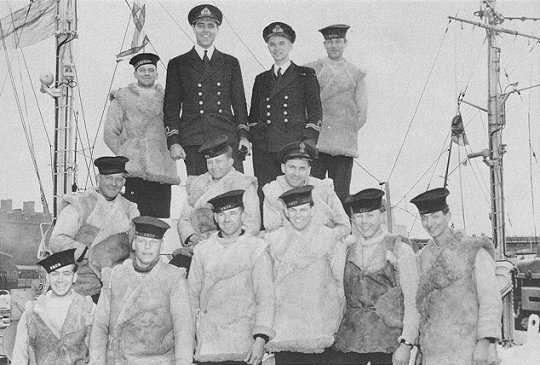
The 29th MTB Flotilla, commanded by Lieutenant-Commander Anthony Law, arrived in the United Kingdom in early 1944 and was stationed at HMS Hornet, a Coastal Forces base in Gosport, England. The 65th Flotilla followed later that year, composed of freshly trained crews eager to contribute to the war’s sharpest front.
Both flotillas operated under the aegis of the Royal Navy’s Coastal Forces, yet they maintained operational control under Canadian officers, wearing the maple leaf insignia with pride. As Law later wrote in his wartime memoir White Plumes Astern, “We fought in their waters, but for our flag” (Law, 1988, p. 34).
The Boats: Greyhounds with Teeth
Canadian MTBs were predominantly British-built 70-foot Vosper or Fairmile ‘D’ class vessels, constructed of wood and powered by three Packard gasoline engines capable of driving them up to 38 knots. Armament included:
- 2–4 torpedo tubes (18-inch)
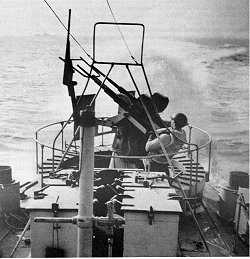
- Twin Oerlikon 20 mm anti-aircraft guns
- Depth charges
- Machine guns and flare launchers
Lightly armoured and vulnerable to even small-arms fire, their advantage was in speed and manoeuvrability. “A fighting platform with the skin of a canoe,” as one Canadian sailor dryly put it.
Each boat was typically crewed by 12–14 men, many of them in their early twenties. They endured brutal Channel weather, constant enemy fire, and the ever-present threat of collision or grounding in the dark.
Into Action: The D-Day Invasion and Aftermath
On June 6, 1944, as Allied armies stormed ashore at Normandy, the 29th MTB Flotilla took on a vital role: interdiction and interdiction of German E-boats (Schnellboote) attempting to attack the invasion fleet. That night, Canadian MTBs patrolled the Baie de Seine, using radar and visual tracking to intercept fast German craft attempting to slip out from ports like Le Havre and Cherbourg.
In the words of historian Mark Zuehlke: “Their job was to kill in the dark and vanish by morning” (Holding Juno, 2009, p. 112). The 29th engaged in several sharp skirmishes with E-boats, sometimes in exchanges lasting mere minutes. One Canadian MTB, MTB 486, was nearly lost after taking heavy fire, but the crew kept her afloat and returned to base with torpedo tubes empty and decks slick with blood and diesel.
Post D-Day, both flotillas were kept on near-constant night operations, protecting the vital supply lines running into the Normandy beachhead and ambushing German coastal convoys. In August 1944, they supported operations off the Channel Islands and later in the Scheldt estuary, helping to clear the approaches to Antwerp — a logistical lifeline for Allied armies.
Tactics and Encounters with German Forces
Canadian MTBs primarily targeted:
- German E-boats, which were faster and more heavily armed.
- Armed trawlers and patrol boats
- Merchant shipping and supply barges
Their tactics relied on radar sweeps, shore-based intelligence, and often sheer luck. Engaging E-boats was like “dogfighting in pitch black,” according to veteran Sub-Lieutenant Doug Drysdale (quoted in Bagnell, 2008, p. 77). One night in October 1944, a Canadian patrol led by Law ambushed a German convoy off Cap de la Hague, crippling one escort with torpedoes before withdrawing under heavy return fire.
The Final Months: Channel Battles and Coastal Raids
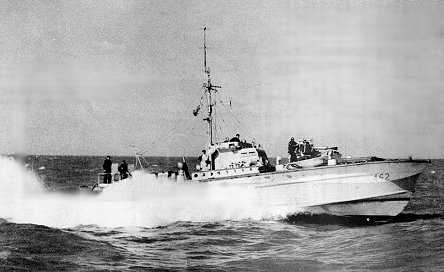
As the Germans withdrew from France, their remaining naval units concentrated in ports along the Dutch coast. The 29th and 65th MTBs were deployed to Ostend, Belgium, and later Den Helder, where they patrolled the North Sea and Frisian Islands, intercepting barge traffic and resisting German minelayers.
By early 1945, their targets grew scarce, but the danger did not. Mines, weather, and occasional Luftwaffe air attacks remained constant threats.
According to naval historian Marc Milner, “The Channel was no longer a battleground — it was a graveyard in waiting” (Canada’s Navy: The First Century, 2010, p. 183).
Aftermath and Legacy
With the end of the war in Europe in May 1945, the 29th and 65th Flotillas were disbanded. Their work was largely unheralded in the public imagination, overshadowed by the massive fleet actions of the Pacific or the convoys of the Atlantic.
Yet their contributions were vital. Fast attack craft, and the men who sailed them, denied the Germans control of the Channel, protected supply lines, and offered surgical precision in a messy, grinding war.
“They were Canada’s pirates of the Channel,” wrote naval analyst B.N. Bagnell. “But they wore the King’s uniform and earned every ounce of salt in their blood” (Godspeed Little Canada, 2008, p. 93).
References
- Law, A. (1988). White Plumes Astern: The Short, Daring Life of Canada’s Coastal MTB Squadrons in WWII. Vanwell Publishing.
- Zuehlke, M. (2009). Holding Juno: Canada’s Heroic Defence of the D-Day Beaches. Douglas & McIntyre. pp. 109–132.
- Bagnell, SAT. (2008). Godspeed Little Canada: An Operational History of the 29th and 65th Royal Canadian Motor Torpedo and Gun Boat Flotillas, 1944–1945. Library and Archives Canada. PDF link
- Milner, M. (2010). Canada’s Navy: The First Century. University of Toronto Press. pp. 178–185.
- Gimblett, R.H. (2009). The Naval Service of Canada, 1910–2010: The Centennial Story. Dundurn Press.